15 Oct Planning for Better Cities
Point of View:
Planning for Better Cities
As with many aspects of design (and life), there’s been a lot of debate about what will evolve and what will remain the same after COVID-19. This Summer, Withee Malcolm has been evaluating topics and reviewing projects past and current to anticipate the ways the pandemic will shape the design and construction process in the future. In our last installment of this Design in a Post-COVID World series, we are pivoting from building-specific topics to look at planning and community configuration.
At Withee Malcolm, planning and organization of multifamily developments are as much a part of the design process as the architecture or interior layouts. We feel that’s significant, particularly as anecdotes continue to emerge about mass exoduses from urban centers as a result of coronavirus and teleworking. We have not found any credible data or proof that cities are hallowing out. In fact, conversations with clients and colleagues still point to continued interest in and growth across Southern California’s communities.
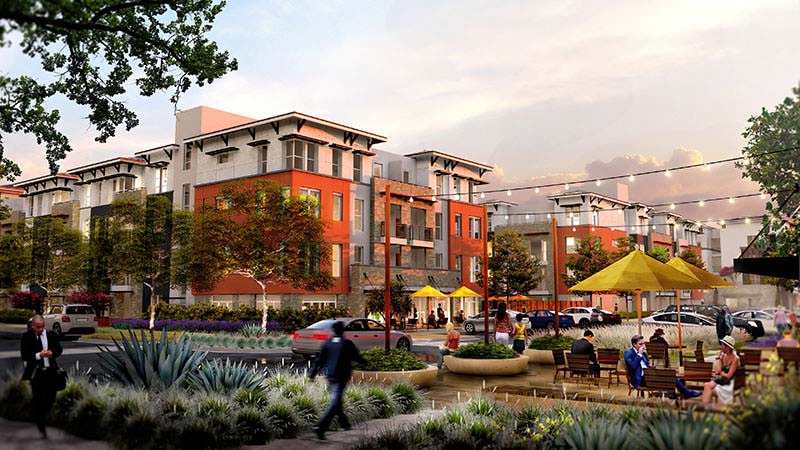
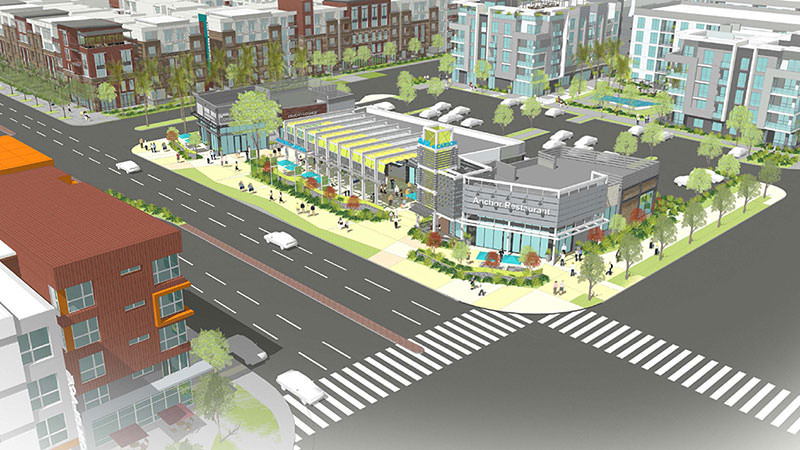
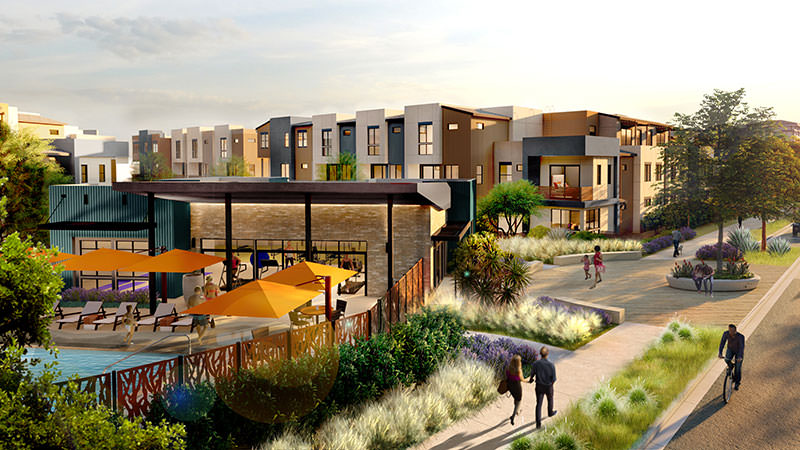
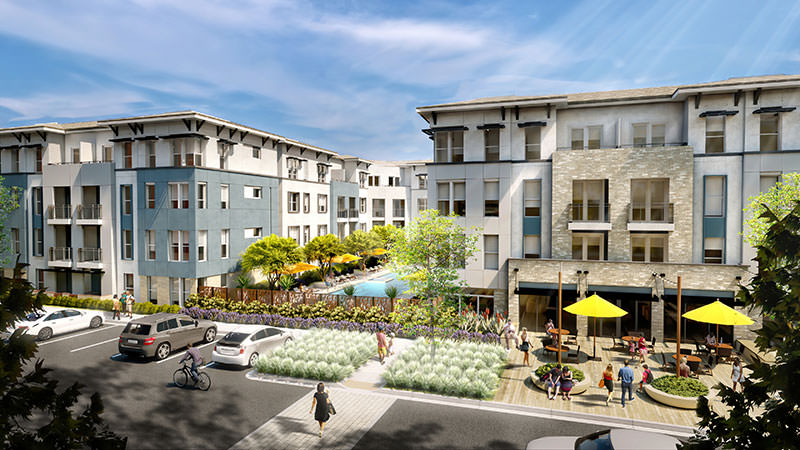
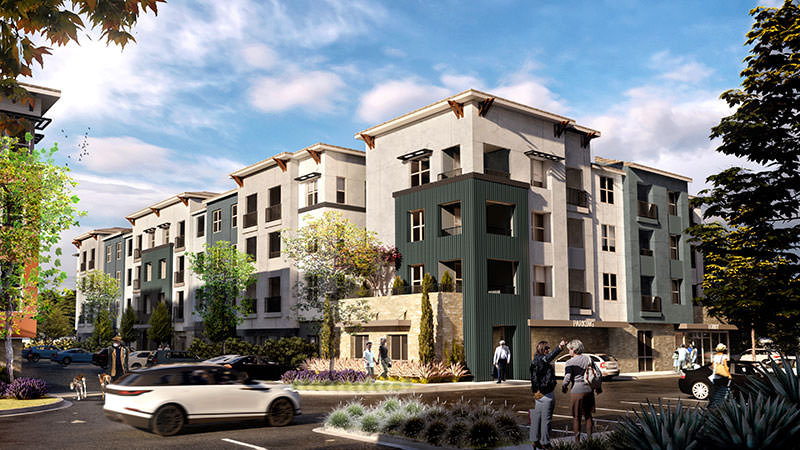
The points, and debates, that have risen in our conversations about this topic center on density, and whether the pandemic threatens density as a building block of our urban economy. We’ve taken that question to task, and through an evaluation of three of our current projects, feel designers and clients can design for density in healthy ways. For Withee Malcolm and other multifamily designers that translates into not only a recovery from COVID-19, but the ability to support the vibrancy, diversity and wellness of urban centers.
The Urban Model: Sunwest, East Hollywood
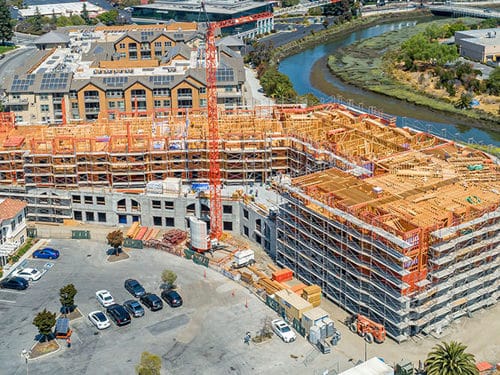
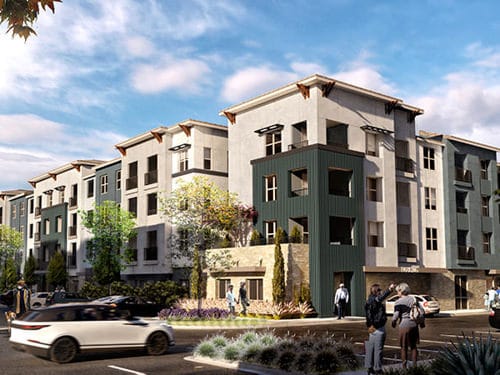
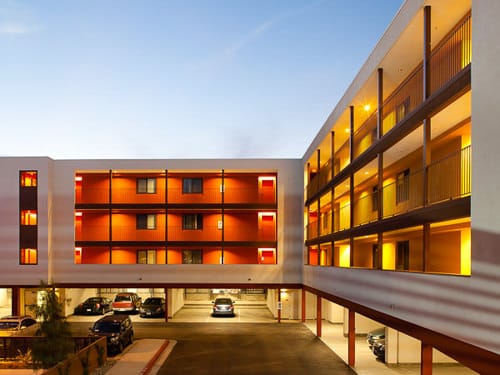
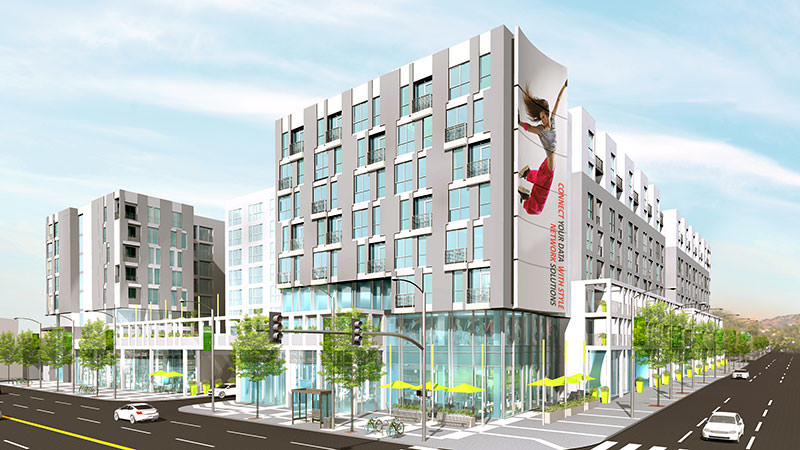
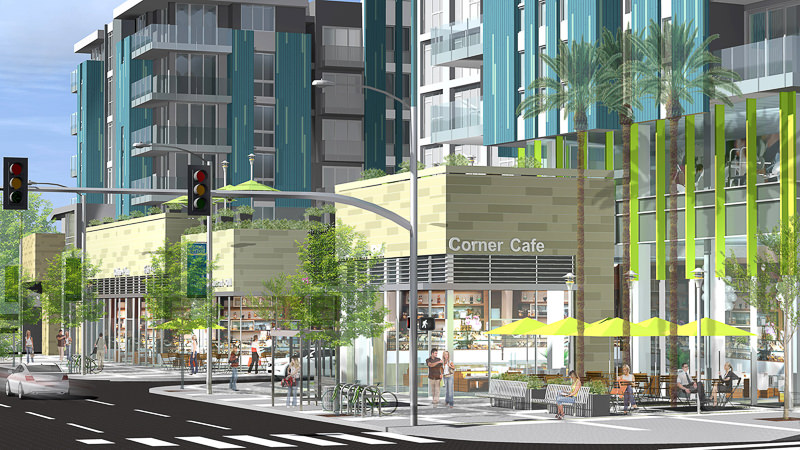
Located at the corner of Sunset and Western in the heart of East Hollywood, Reliable Properties’ Sunwest development is planned as a bellwether of community reinvigoration. With 412 units of much-needed rental housing, this highly dense development relies on an interplay of stepped facades, glass storefronts, open balconies and mid-level open spaces between ground-floor commercial and upper-level residential for an engaging streetscape that merges with residential living. Rental units include studios, one and two-bedroom units, and a unique four-story stack over the community spaces comprised of interlocking micro-units that share a common lounge, laundry and large deck on each floor. Because of its location at a major intersection and its 2-block proximity to transit, the project was actually upsized to 186 units-per-acre because it offered a dense yet healthy urban development solution, including 61 units of very low-income housing.
The Suburban Model: Jefferson on Avalon, Carson
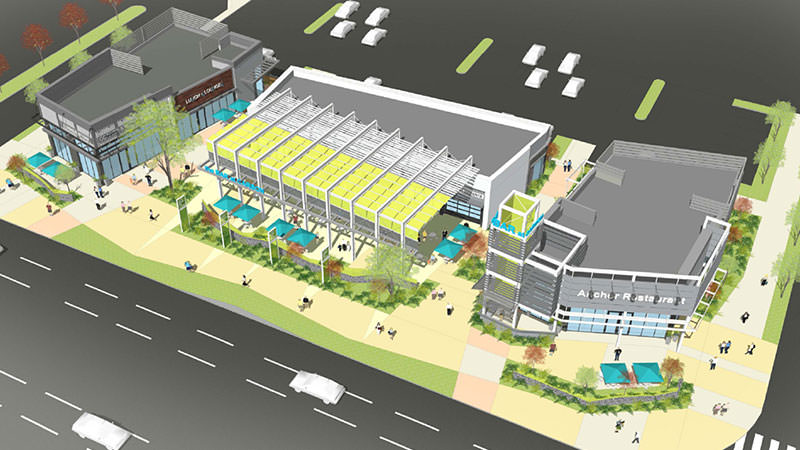
Jefferson on Avalon is an award-winning masterplan and development for a 20.5-acre, 77 unit-per-acre mixed-use project in Carson. Developed by JPI, the plan brings together multifamily residential apartments and townhomes, a hotel, and a 12,000-square-foot central gathering pavilion/food hall in a linchpin location between an active commercial district and the City’s Civic Center. Continuing commercial offerings as an amenity for residents and a link between these two centers along this highly trafficked corridor of Avalon Boulevard was a priority, so WM planned the triangular site with a hub and spoke model, with food and amenities at the center and three district housing districts and the hotel surrounding it. This plan also offered a way to use parking structures as environmental buffers from the 405 freeway, which abuts the longest edge of the site. Design and detailing blends the garages into the residential context while generous walking paths and bike lanes and storage encourage car-free access to retail and hospitality.
The Hybrid Model: Metro Walk, Santa Clarita
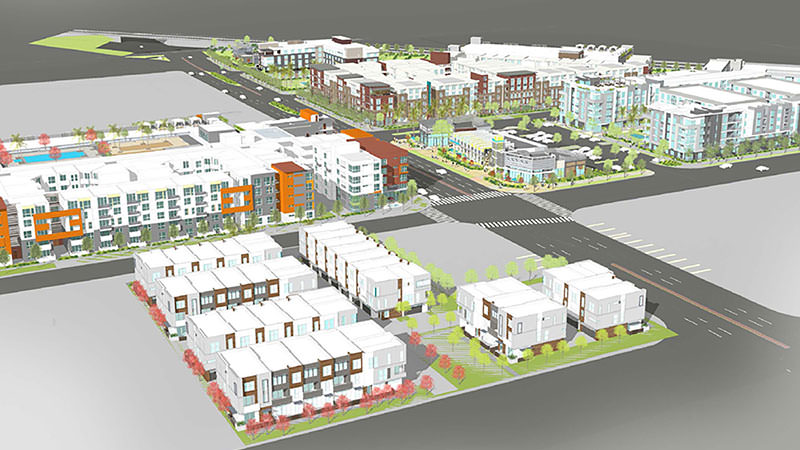
The final community planning example that offers a template for improving quality of life in cities after COVID-19 is Metro Walk in Santa Clarita. Building on its location directly adjacent to a new Metrolink station and bus transit center developed as part of the largescale Vista Canyon community, the 20-acre site is planned with for-sale townhomes, market-rate apartments, age-qualified apartments and affordable senior apartments. This income and age-diverse housing is tied together via a linear pedestrian throughway that terminates in a nearly 1-acre park. At 27.4 units-per-acre it offers sustainable living as a gateway to high-speed transportation and office and commercial opportunities in Vista Canyon.
In alignment with Vista Canyon and the County of Los Angeles’ sustainability goals, New Urban West approached WM with the charge to position the development as a pedestrian- and cyclist-friendly community, so developing connections and amenities around the Metrolink served as inspiration. 150 three-story townhomes, which cater to families, are located closest to the park while 348 four-story market-rate apartments—119 of which are age-qualified and 50 are set aside as affordable senior units—are sited as mini-communities, each with its own pool and amenity areas. The pedestrian throughway weaves throughout the project, offering a variety of views, plant palettes, and spatial experiences.
So despite reports that cities are emptying out as inhabitants are opting for suburbs, Withee Malcolm and development partners are showing the ways in which future developments can support the lifestyle, culture and diversity of urban developments with varied density counts. As designers, we’re more motivated than ever to plan communities in ways that encourage healthy living and allow our communities to thrive long into the future.
Previous Posts